

HORIZON AG REGIONAL REPORTS
A Strong Start to June Across the Delta and Gulf Coast
Missouri & Northeast Arkansas
Eyes on the sky
Northeast Arkansas pilots had a busy first week of June to kickoff the month. While the earlier rainfalls were welcomed, the extended days of cloudy, wet conditions intensified herbicide activity and delayed fertilizer/flooding plans. I suppose we can't have our cake and eat it too. The Provisia® varieties, such as PVL04 and PVL06, continue to be positive topics of discussion. We are all looking forward to the end of year conversations about these varieties.
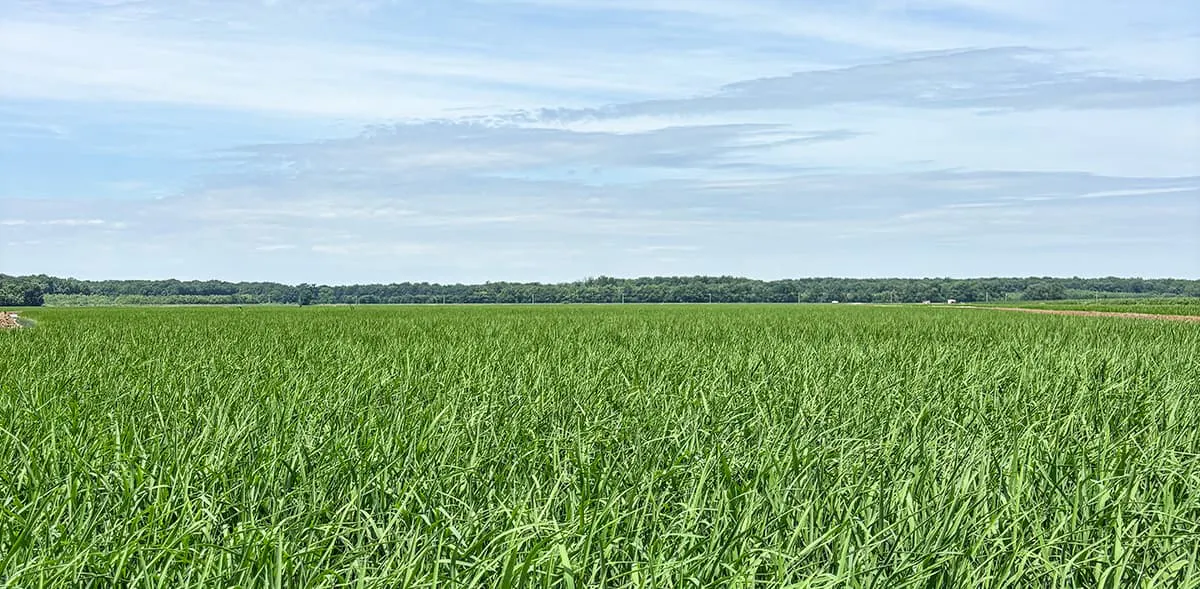
PVL04 located near Puxico, Missouri.
Flashing rice with a little dash of salt
The last week was spent looking at rice with lots of flashing due to ALS chemistries (such as Permit®, Permit Plus®, Newpath® and Ricestar®). This shouldn't come as a surprise with the amount of rain we've received over the last week and a half, which continues to activate the herbicides. Due to the lack of moisture at the beginning of the season, we are just now seeing the herbicides go to work for us. Rice cultivars that are being grown in fields that have sandy loam soil pockets or were recently graded can become stressed once the herbicides start activating. If you notice your rice is flashing severely, remove the flood to allow reintroduction of oxygen to the soil. After the rice starts to green back up, reapply the flood.
Another abiotic stress factor we are seeing is salt sensitivity following previous soybean rows and in-row rice scenarios. Unfortunately, rice is most sensitive during the seedling stage (2-3 leaf), and there is not much we can do other than flush the rice with fresh water to encourage surface runoff or downward percolation. Why are we noticing salt intolerance in fields with no recent history? Mainly because of the drought we are currently in; the lack of rainfall during the fall and winter prevented salts from being leached deeper into the soil profile, as typically occurs under normal conditions.
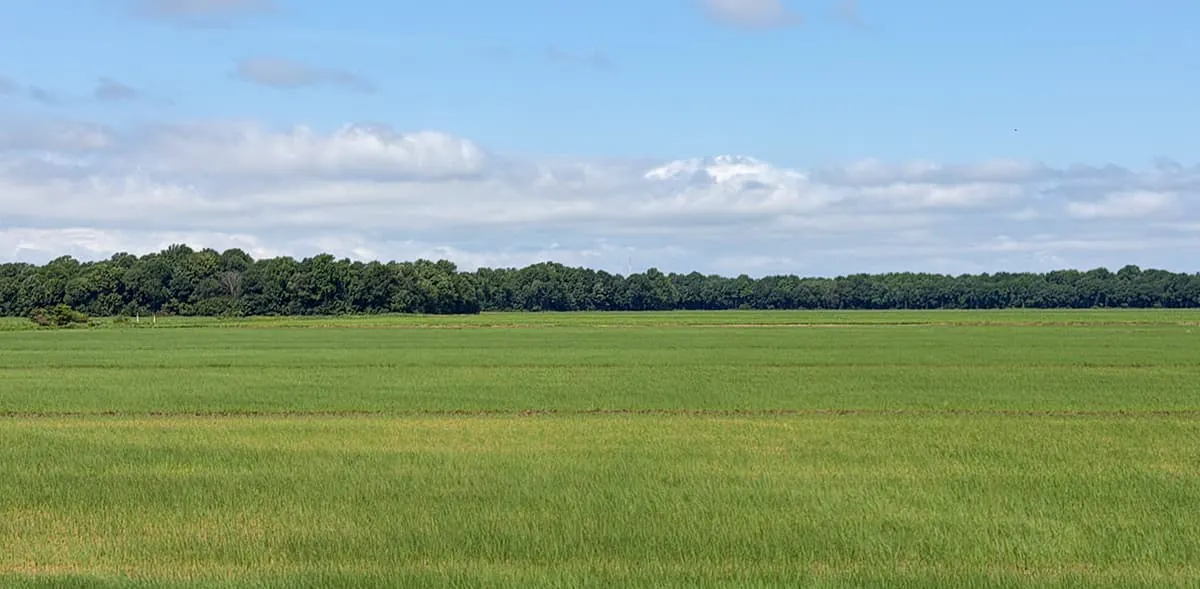
Rice expressing "flashing" due to ALS herbicide activity.
Making fertilizer decisions in suboptimal conditions
In May of 2024, Dr. Jarrod Hardke discussed how to manage suboptimal fertilizer conditions. It's worth revisiting that conversation this year. As always, it is recommended to run a DD50 program to see the final recommended date to apply your nitrogen. Just to recap his commentary:
Field is dry: Apply the fertilizer as urea treated with NBPT.
Field is muddy: Once the field is free of standing water, apply urea treated with NBPT. After the application, let the soil dry beneath the urea, if possible. But if rain comes immediately, flood the field. If the muddy conditions are present and not likely to change, increase the preflood rate by 10-20 lb N/acre and start the flood. If conditions are poorer, go with an increase of 20-30 lb N/acre.
Field is flooded: If the rain continues through the final recommended time to apply N, set your spills and begin applying N in a "spoon-feed" manner. For our varieties, we are recommending at least 4 applications of 100 lb urea/acre once a week, but I encourage you to plan for 5 applications to maximize yield. On CLL19, I recommend starting this process sooner rather than later.
Visit the following link to read Hardke's full commentary.
Reach out to me with any concerns or questions. We're grateful for the opportunity to walk alongside your rice crop.

Robyn Chlapecka
District Field Representative
rchlapecka@horizonseed.com
(870) 672-1291
Texas
Jason Satterfield, our Director of Sales, provided an update on the crop down on the Texas Gulf Coast. So far, the rice crop is growing well. The early rice planted in February is heading in the region, while the majority of the rice crop planted during March is approximately mid-boot. Normal agronomic decisions regarding stink bug thresholds are being evaluated. Delaying applications with the potential to treat possible Delphacid infestations is part of the ongoing discussions for management this season. This would help to minimize the harm to beneficial insects until absolutely necessary and decrease the number of applications by combining insecticides in a year where every dollar matters. Horizon Ag's jasmine, CLJ01, is on a number of acres in Texas. And from what I have seen and what growers are saying, we are all cautiously optimistic for this crop's potential.
Grand Prairie, Arkansas
The weather has been a key driver of this year's crop development. We still have drought conditions across my territory, but we have caught up some with the recent rains. The rain and cooler weather slowed crop progress for a few weeks, but the forecasted weather will provide some good growing conditions.
The early-planted rice is now reaching panicle initiation (green ring). Midseason nitrogen applications will be going out over the next couple of weeks. Remember, we want to be 3-4 weeks past incorporation of the preflood nitrogen and at or beyond green ring before applying any midseason nitrogen. This will help make sure we aren't still taking up preflood nitrogen and we will get the most use out of our midseason N. Do not go over 100 lbs of urea (46 units of N) on the midseason shot.
Everyone is trying to take the second-planted rice to flood now ahead of the next weather events. Most are waiting for dry ground to get fertilizer out and get it done right the first time. Final N dates are approaching on some of that rice, and we need to have nitrogen applied and incorporated before that optimum deadline passes.
The time is rapidly approaching when we will begin to scout for diseases. We need to be scouting for blast and sheath blight between green ring and heading.
The Provisia system has helped clean up some fields that we are now able to spray after weeks of wind and rain have kept us from making herbicide applications. The rice has shown some flashing due to the conditions we have had, but with the improved weather conditions the crop has responded very well and is looking better. Don't hesitate to reach out with any questions.

William "Hutch" Hutchens
District Field Representative
whutchens@horizonseed.com
(870) 273-9291
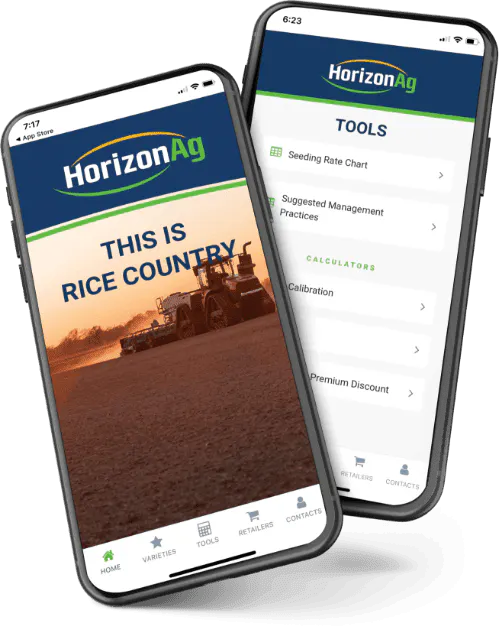
Download Our Mobile App
The Horizon Ag Productivity app provides easy, in-field access to management recommendations and tools — including seeding rate charts, a drill calibration calculator and other suggested management practices — so you can get the most out of our varieties.


 |
|
Copyright ©2026 Horizon Ag, LLC